- No.
- C-2
- From
- Room One, the head office desk in Taubaté
- To
- Whoever keeps a full week in order
- Re
- Summing up in a sentence
One Line on the Flap
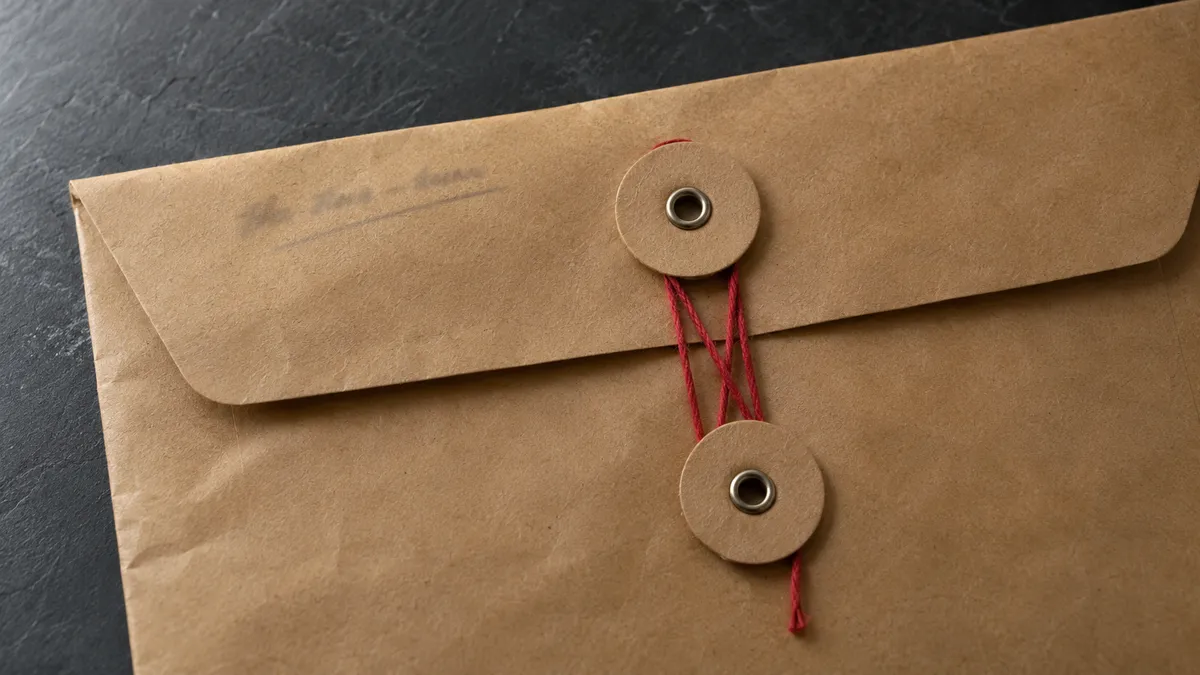
Internal envelopes at the office travel between desks and drawers, sometimes for months. To spare everyone the job of opening them, whoever seals one writes a single line on the flap: what is inside, in plain words.
Why the desk does it
It sounds like housekeeping, and partly it is. But the person who writes the line gets something out of it too. To fit a twenty-page document into one sentence, you have to decide what actually matters in it. That small act of choosing is where understanding happens.
Teachers have long asked students to summarize in their own words for the same reason. Turning something over into your own sentence means working with it, not just looking at it, and material you have worked with is generally easier to bring back later than material you only saw.
Carrying it home
Every day brings envelopes of a different kind: a conversation with a neighbor, a phone call from the bank, a radio interview, a chapter of a novel. Each one can get its line on the flap. At the end of a phone call, say to yourself in one sentence what was agreed. After reading a chapter, write one line in the margin or on a bookmark. After a visit from a grandchild, jot down the one thing they told you that you want to ask about next time.
The rule is to keep it to a single line. Longer notes are useful too, but they skip the step that does the work, which is deciding what the whole thing comes down to.
On your own desk
- Pick one moment a day to practice: the end of a call, a chapter, a meeting.
- Say or write one sentence that sums it up, in your own words, without looking back.
- Keep the lines together in one small notebook, so the week reads like a stack of labeled envelopes.