- No.
- C-3
- From
- Room One, the head office desk in Taubaté
- To
- Whoever keeps a full week in order
- Re
- Marking what is finished
Dated and Initialed
Any office that handles other people's documents learns to record not only what needs doing but what has been done. At the head office desk, each finished step gets a date and two initials beside it, written at the moment it is finished, not later.
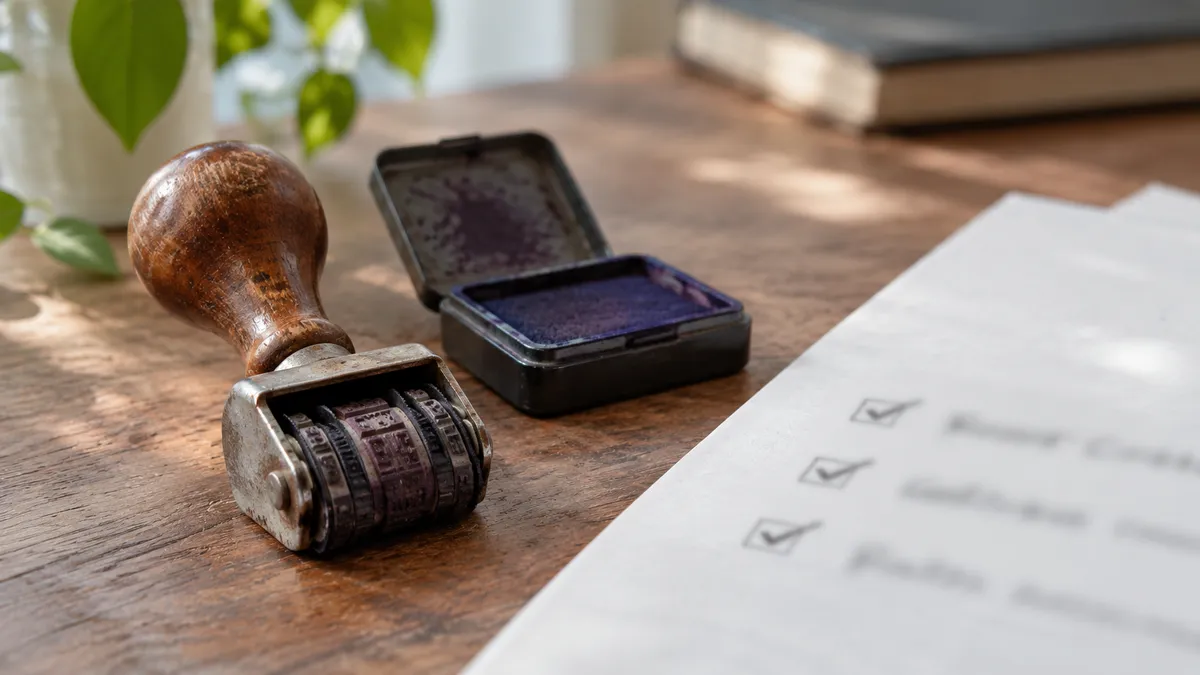
Why the desk does it
The point is not bureaucracy. It is that a step done on autopilot leaves almost no trace in memory. The letter was posted, the form was sent, the call was returned, and a day later nobody can say for sure. Writing the date and initials forces a half-second of attention right when the thing happens, and leaves a record for the moments when attention was elsewhere.
Psychologists describe something similar when they talk about actions performed out of habit: because they need so little thought, they are easy to repeat or to imagine having done. A deliberate pause, even a tiny one, helps fix the moment.
Carrying it home
At home the doubts are familiar. Did I lock the back door? Did I turn off the stove? Did I pay the water bill or only open it? Did I call my sister back? A short list on the inside of a kitchen cupboard, with a space for the time and your initials, settles each one in seconds. Some people prefer to say the action aloud as they do it: "back door locked." Both work for the same reason: each one makes you notice a gesture you would otherwise make blind.
On your own desk
- Choose the three or four things you most often double-check.
- Each time you do one, pause, say it aloud and mark the time beside it on a small card.
- When the doubt comes later, read the card instead of walking back to check.