- No.
- C-4
- From
- Room One, the head office desk in Taubaté
- To
- Whoever keeps a full week in order
- Re
- A weekly sitting with yourself
The Standing Agenda
A holding company meets about its holdings, and the meetings follow a standing agenda: a fixed list of items, taken in the same order, so that nothing important depends on someone happening to remember it.
Why the desk does it
A standing agenda moves the remembering out of the head and into the routine. Nobody has to recall that the accounts are due for review; the item is simply there, every time, in its usual place on the list. That leaves attention free for the actual decisions.
A fixed time helps as much as the fixed list. When the meeting always falls on the same morning, it stops competing with everything else. It becomes part of the shape of the week.
Carrying it home
A household runs on more moving parts than it seems: appointments, bills, birthdays, repairs, people to call back. Most of them slip only because there was never a set moment to look at them. A weekly sitting of twenty or thirty minutes, at the same table and hour each week, with a short standing agenda, catches them before they slip.
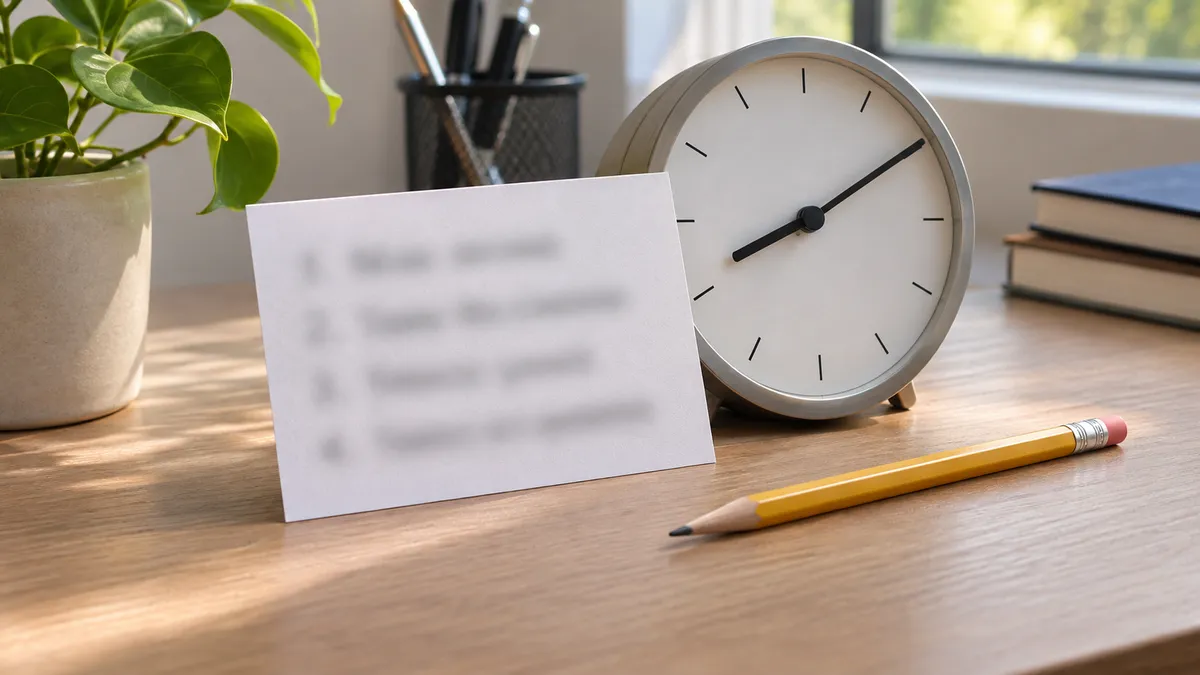
The agenda can be four items long. Calendar: what is coming in the next fourteen days. Paper: what arrived and needs an answer. Money: what is due. People: who you owe a call, a card or a visit. Go through them in that order, every week, even when one of them has nothing in it. The empty weeks are what make the full ones manageable.
On your own desk
- Choose a day and an hour you can keep most weeks, and a place to sit.
- Write the standing items on a card and keep it with the calendar.
- Take them in order every time, writing any action on next week's page before you get up.